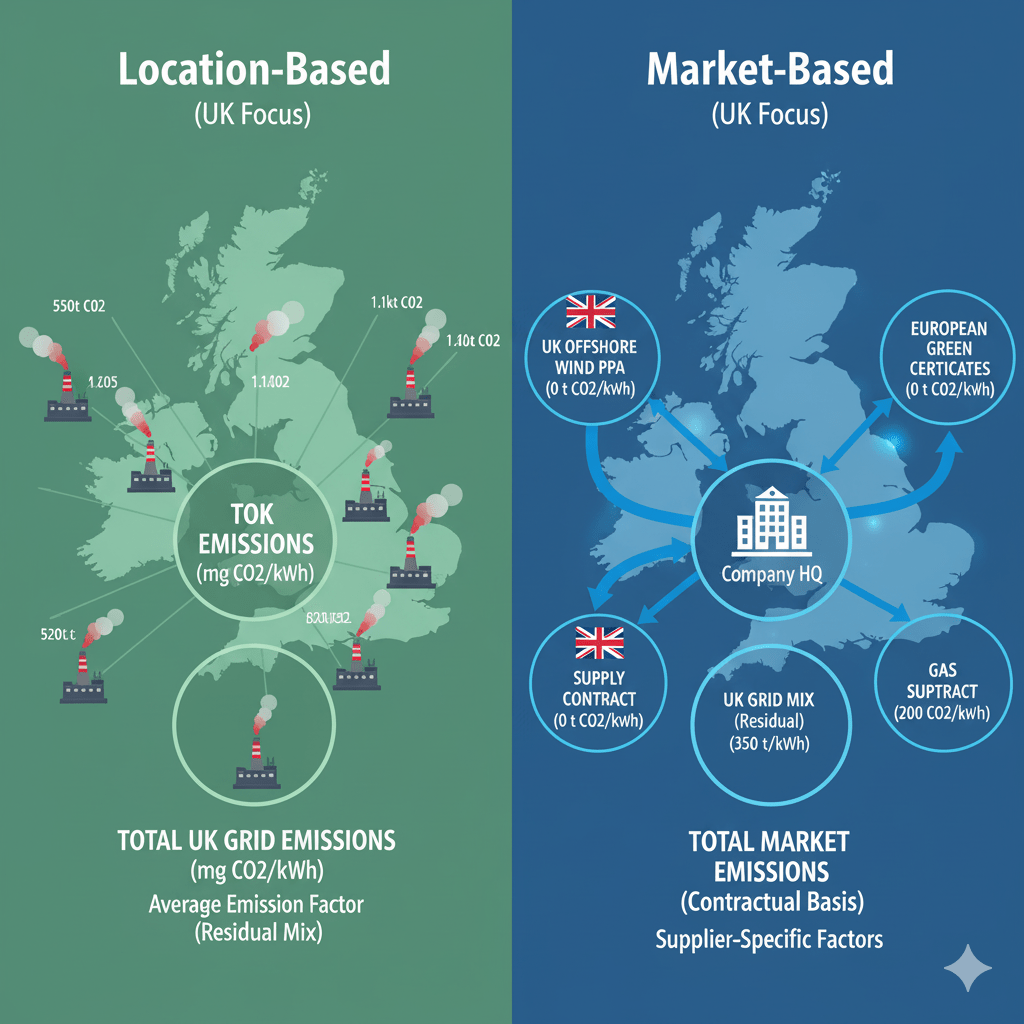
Why is the Green House Gas Emissions Protocol requiring the reporting of both and what are the intended aims.
Market-based Reporting – Simply put this is the emissions from the electricity you purchase.
Location-based Reporting – This is the emissions related to used energy, depending where you are.
There is no longer the opportunity to choose between what reporting mechanism is being used. You need to report both.
So why is this?
Basically, market-based reporting has achieved its aim.
The point of market-based emissions reporting was to incentivise companies and electrical suppliers to place money in renewables. This by and large has worked well. Last year in the UK more than 125TWh of electricity was generated from renewables (not including for the amount of renewables that’s been curtailed and battery storage).
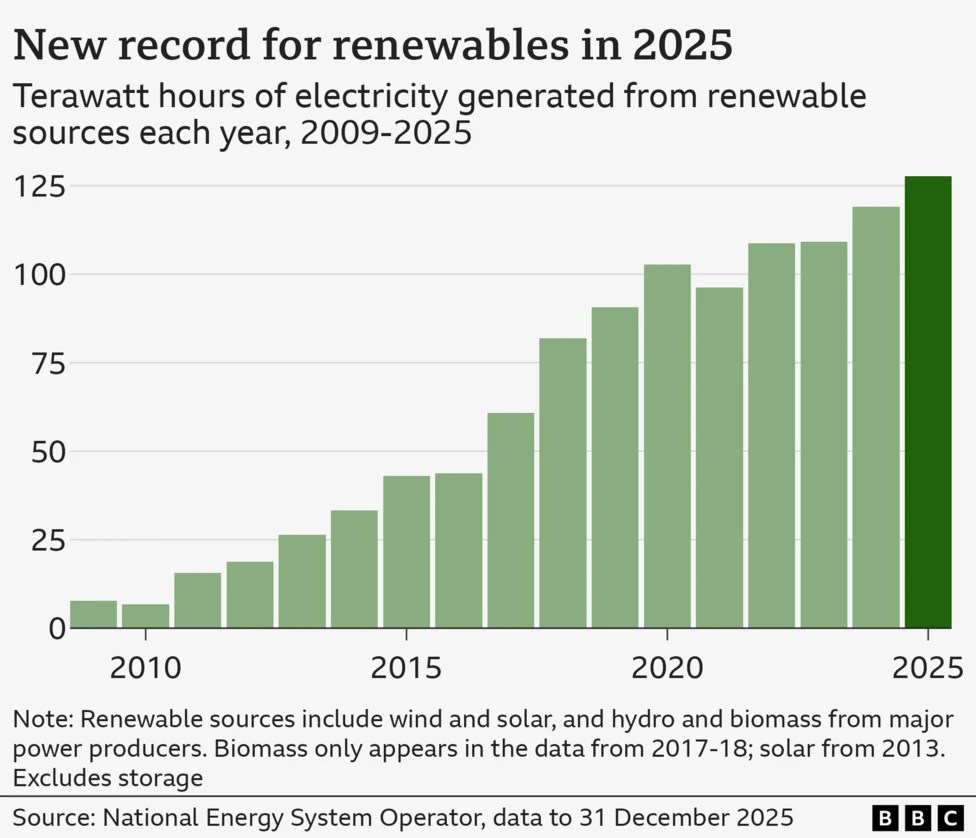
The problem’s no longer a generation issue. The UK frequently has days where it’s fully renewable. It’s now a utilisation issue. Renewables don’t, and won’t, for some time generate the required energy profile.
Below is the average winter day for renewable generation and home usage in the UK per 30 minutes.
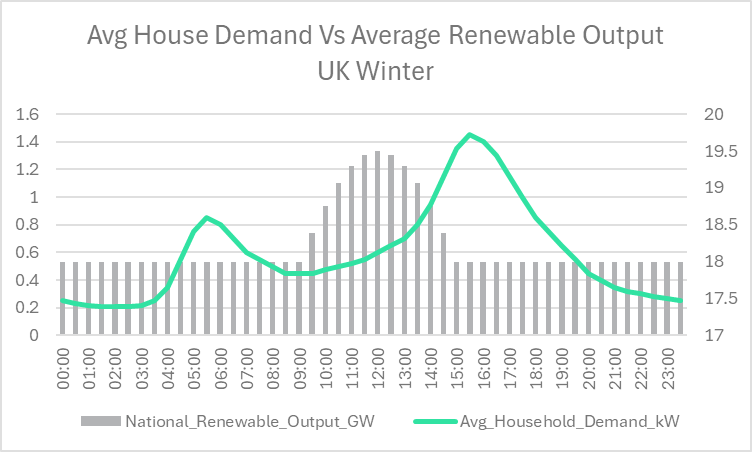
Unsurprisingly the timings don’t quite match. Renewable generation is highest in the middle of the day, when both solar and wind are in play. But come the evening, home energy usage goes up as the renewable generation is dropping down.
These fluctuations are proposed to be solved through storage – be it battery of otherwise – but large-scale storage isn’t there yet, and won’t be for some time… potentially years, maybe even decades! Add inertia issues into the equation and the timescales stretch further, but that’s a post for a different day.
Therefore, there are currently lots of energy suppliers who in the net aggregate supply fully green electricity, but who minute to minute don’t supply their clients with green energy, as the National Grid, who manages the show, are turning on carbon assets to keep the lights on, and Currently business’s don’t react to this carbon signal.
So why Both mechanisms are needed
This means from a reporting standpoint that market-based emissions are showing companies as having 0 emissions for Scope 2 (they are buying all their electricity from green sources).
However, the practicality is very different, as during these peak periods, which occur nearly every day and the general intermittency of renewables, the electron flowing through the wire isn’t always green. As National Grid have to switch on gas assets to meet the supply demands.
The next logical step.
Why granularity matters!
Market-based reporting has incentivised the production of renewables.
In the same way, location-based hourly reporting or accurate hourly market-based reporting will incentivise flexibility and storage opportunities.
More granular matching of both market-based reporting and location-based reporting is currently being discussed by the Greenhouse Gas Protocol.
This is the next logical step in getting business to help the electrical network decarbonise.
This type of requirement to correctly map carbon to usage at time of day will incentivise large businesses to increase their flexibility – whether that be the installation of batteries, timing the control of heat pumps and EV charging or just generally incentivising flexibility in a business operations.
Whether this gets adopted at the next GHG update or the one after, one thing is for certain granular reporting will be required.


 Emissions Intelligence